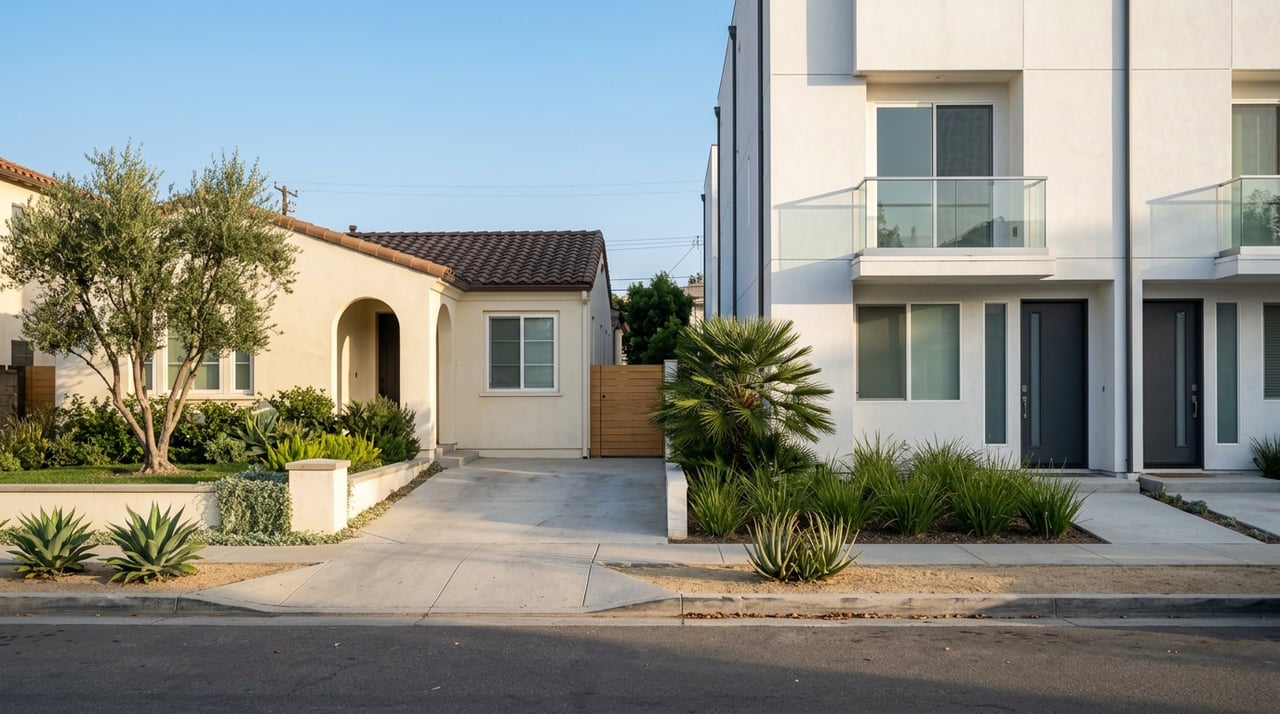
Trying to decide between a house and a townhome in Carmel Valley? You are not alone. In this part of San Diego, both options can look appealing at first glance, but they often lead to very different monthly costs, maintenance routines, and day-to-day living. If you are weighing price, privacy, HOA rules, and long-term fit, this guide will help you sort through the trade-offs with more confidence. Let’s dive in.
Carmel Valley Housing Snapshot
Carmel Valley is a master-planned community along the Interstate 5 corridor, and the City of San Diego notes that it includes shopping, restaurants, parks, trails, open space, civic facilities, hotels, and corporate offices. The city also says the original plan focused development on mesa tops while preserving canyon open space, which helps explain why both attached and detached homes play a big role in the area.
It is also a competitive market. Recent market snapshots showed median days on market in the low 20s, with sale and list prices around the $1.7 million to $1.75 million range for Carmel Valley overall. Redfin also currently labels the area minimally walkable, with a Walk Score of 37, so for many buyers here, convenience, commute access, and ownership style matter just as much as finishes and floor plans.
Houses vs Townhomes on Price
If budget is a major factor, the numbers create a clear starting point. In the Greater San Diego Association of REALTORS' April 2026 update for 92130, the median sales price for detached homes was $2,475,000, while attached homes came in at $1,160,000.
That is a big gap, and it is one of the main reasons many buyers start with townhomes in Carmel Valley. Attached homes can offer a lower entry point into the neighborhood, even though they still sit in a premium price range compared with many other San Diego communities.
That said, lower does not always mean low. Current townhome examples in Carmel Valley range from roughly $971,000 for a smaller 2-bedroom unit to about $1.795 million for a larger 4-bedroom home, with many listings landing in the $1.0 million to $1.5 million range.
This matters because some larger or upgraded townhomes can overlap with entry-level detached homes. If you are shopping near the top of the townhome range, it is worth comparing monthly costs and lifestyle trade-offs side by side rather than assuming attached is automatically the better value.
Monthly Cost Means More Than Price
The purchase price is only one piece of the decision. In Carmel Valley, your real monthly cost usually includes the mortgage, property taxes, HOA dues if they apply, and any Mello-Roos assessment tied to the property.
Townhomes often come with HOA dues in exchange for shared maintenance and amenities. Current Carmel Valley listings show monthly HOA dues ranging from the mid-$300s to the mid-$500s, with examples such as $344, $366, $512, $515, and $575 per month. In some communities, dues help cover common-area maintenance, water, sewer, trash, pools, spas, gyms, and similar amenities.
Detached homes can also have HOA dues, which surprises many buyers. Recent local examples include a detached home with $257 monthly HOA dues and access to community amenities, while other detached properties have advertised no HOA and no Mello-Roos.
The key takeaway is simple: detached does not always mean HOA-free, and townhome does not always mean expensive dues. You need to review each property on its own terms.
Maintenance Differences to Expect
For many buyers, the real question is not just what you can buy, but what you want to maintain. A townhome often appeals to buyers who want less exterior upkeep and an easier lock-and-leave routine. A detached home often appeals to buyers who want more control over the property and more separation from neighbors.
California law helps explain why this matters. Under California Civil Code 4775, the HOA is generally responsible for maintaining common area, while the owner is responsible for the separate interest, unless the governing documents say otherwise. The same section also notes that owners are generally responsible for maintaining exclusive-use common area tied to their home, while the association is responsible for repairing and replacing it, unless the declaration changes that arrangement.
In practical terms, that means you should never assume a patio, small yard, driveway, or exterior element is fully owner-controlled just because it feels private. The California Department of Real Estate explains that private yards, driveways, parking spaces, and similar spaces can be designated as exclusive-use common area in common interest developments.
So if you are comparing houses and townhomes in Carmel Valley, ask a more specific question: Who handles what? The answer may affect your budget, your to-do list, and your freedom to make changes.
HOA Rules Can Shape Daily Living
Many buyers focus on dues but forget to ask about rules. California Civil Code 4765 allows HOA governing documents to require approval before an owner makes a physical change to the separate interest or common area. In real life, that can mean exterior updates may need review before you move forward.
This is especially important if you already picture yourself changing windows, redoing the patio, adding hardscape, or making visible exterior design changes. In some communities, those updates may be straightforward. In others, they may require plans, approvals, and longer timelines.
A detached home can offer more flexibility, but even there, you should not assume complete freedom. Some detached neighborhoods in Carmel Valley still have HOA oversight, so the property type alone does not tell you how much control you will have.
Lifestyle Fit: What Do You Want Most?
The house-versus-townhome choice usually comes down to priorities. In Carmel Valley, townhomes often make sense for buyers who want a lower purchase price than a detached home, less exterior maintenance, shared amenities, and a simpler ownership routine.
Detached homes often make more sense if you want more privacy, a larger lot, more parking, or more flexibility in how you use the property. For some buyers, that means room to spread out. For others, it means staying put longer without feeling like they will outgrow the home too quickly.
Because Carmel Valley is still fairly car-oriented, convenience also matters. If your schedule is busy, a lower-maintenance property with HOA-supported upkeep may be more valuable than extra yard space. On the other hand, if privacy and control are high on your list, a detached home may feel worth the extra cost and responsibility.
Questions to Ask Before You Decide
If you are stuck between the two, these questions can help you make a smarter choice:
- Can you comfortably afford the mortgage, property taxes, HOA dues, and any Mello-Roos?
- Do you want to handle more exterior upkeep yourself, or would you rather have shared maintenance?
- How important are privacy, yard space, and extra parking?
- Do you want amenities like a pool, spa, gym, or clubhouse?
- Will you want to make exterior changes that could require HOA approval?
- Are you buying for your lifestyle today, or for how you expect to live in the next five to ten years?
The right answer is usually the one that fits your daily life, not just the one with the biggest square footage number.
What to Verify Before Making an Offer
Before you move forward on any Carmel Valley property, verify the details that shape ownership after closing. This is true whether you are buying a townhome or a detached home.
Here is what to review closely:
- The current HOA amount
- What the HOA dues actually cover
- Whether Mello-Roos applies
- The CC&Rs and any community rules
- Who maintains exterior features, private-use outdoor areas, and shared spaces
- Whether approvals are required for physical changes
- The HOA budget and closing disclosures
These details can change the real cost and feel of a home more than photos ever will.
Bottom Line for Carmel Valley Buyers
In Carmel Valley, a townhome is usually the more affordable path in, while a detached home usually offers more privacy, space, and flexibility. But this is not a simple price comparison. HOA dues, maintenance responsibilities, approval rules, and long-term lifestyle goals all play a big part in which option is actually better for you.
If you want a lower entry price and simpler upkeep, a townhome may be the better fit. If you value privacy, yard space, and more control over the property, a detached home may make more sense. The best move is to compare specific homes with the full monthly cost and ownership structure in mind.
If you want help comparing Carmel Valley homes, townhomes, HOA details, and true monthly ownership costs, Karlee Van Dyke can help you narrow down the right fit with local insight and a clear plan.
FAQs
Is a townhome cheaper than a house in Carmel Valley?
- Usually, yes. In April 2026, the median sales price for attached homes in 92130 was $1,160,000 versus $2,475,000 for detached homes, although larger townhomes can overlap with entry-level detached homes.
Do detached homes in Carmel Valley have HOA fees?
- Sometimes. Some detached homes have monthly HOA dues and shared amenities, while others have no HOA, so you should verify each property instead of assuming all detached homes are HOA-free.
What do Carmel Valley townhome HOA dues usually cover?
- It depends on the community, but current listings show dues that may cover common-area maintenance and, in some cases, water, sewer, trash, pools, spas, gyms, and other shared amenities.
What should buyers check before buying a Carmel Valley townhome or house?
- Review the HOA amount, what the dues cover, whether Mello-Roos applies, the CC&Rs, maintenance responsibilities, approval rules for changes, and the HOA budget and closing disclosures.
Are townhomes easier to maintain in Carmel Valley?
- Often, yes. Many buyers choose townhomes for lower exterior maintenance and a simpler lock-and-leave lifestyle, but you should still confirm which items the HOA maintains and which remain your responsibility.
Is Carmel Valley a good fit for low-maintenance living?
- For many buyers, yes. Carmel Valley offers attached and detached options within a master-planned community, and its car-oriented layout can make convenience and easier upkeep important factors in choosing the right home type.