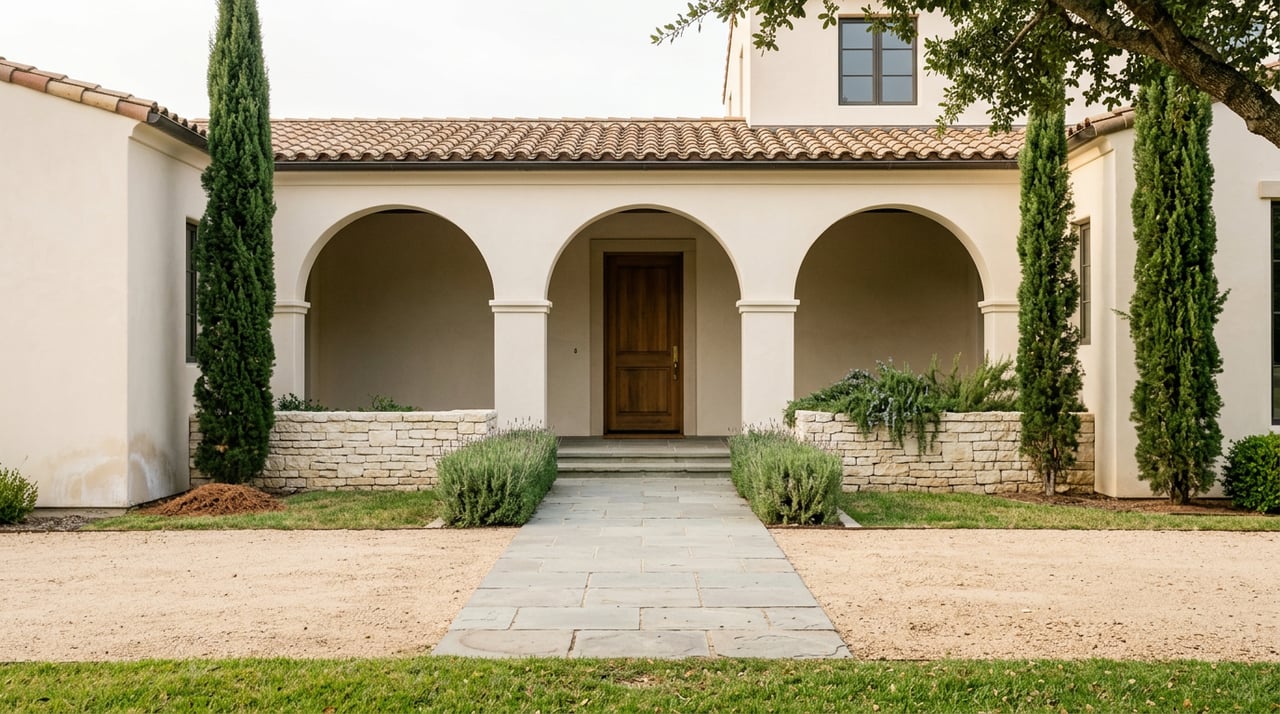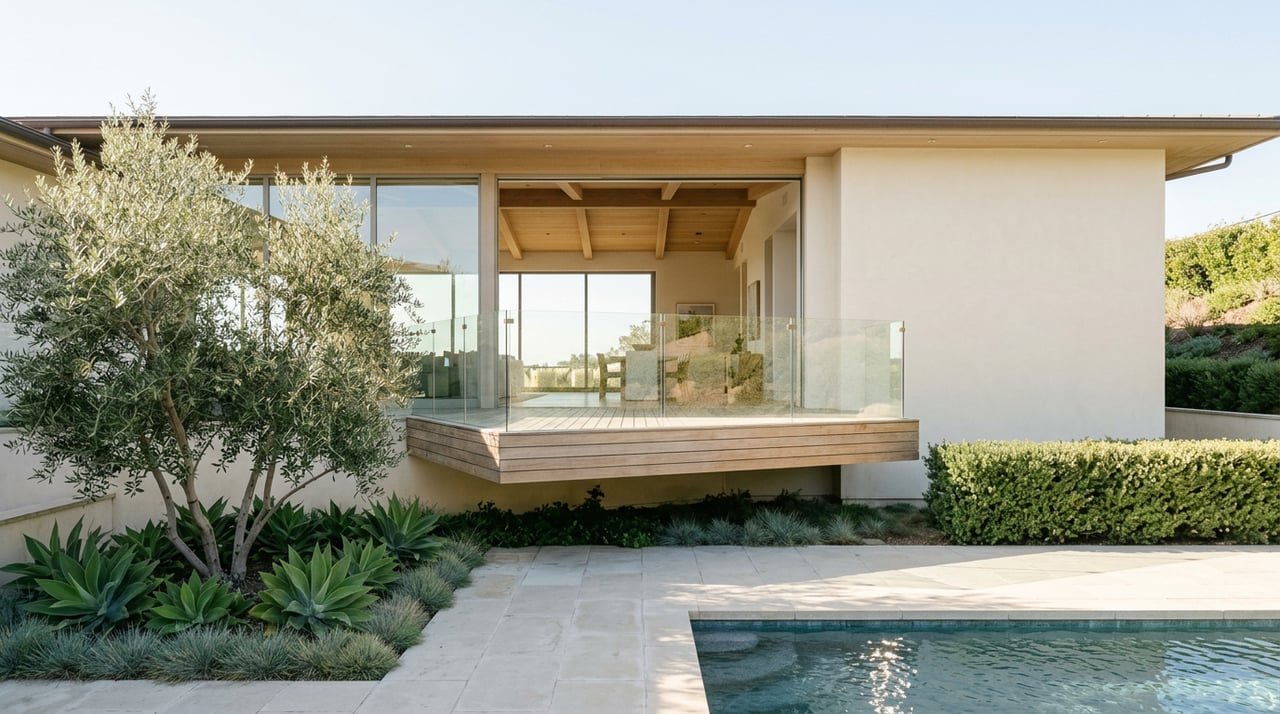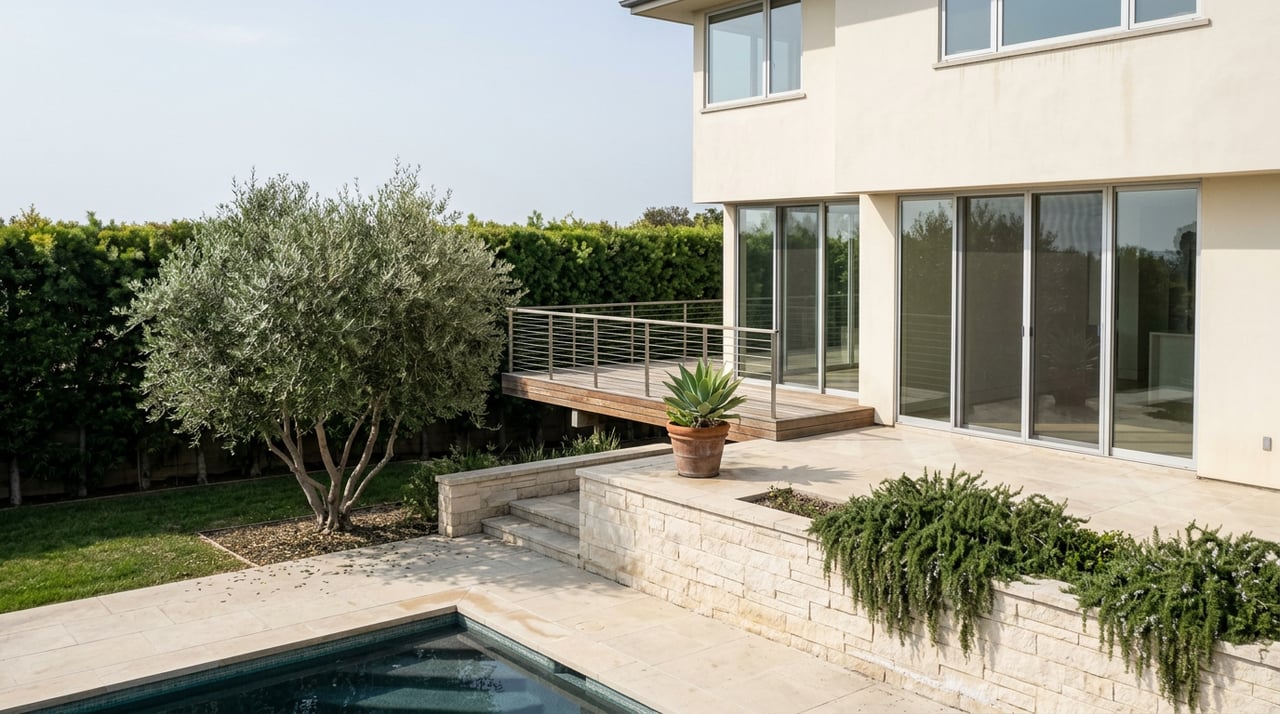
Two buyers could tour Carmel Valley this year and both find something priced right around $1.7 million, which is roughly where Redfin's March 2026 figures and Houzeo's 2026 report both put the neighborhood's median sale price. Same price. Similar square footage. Ten minutes from the same beach.
One of those homes sits in the original Village, feeds Carmel Creek Elementary, and its listing plainly states no HOA and Mello-Roos ending in 2027. The other sits in Pacific Highlands Ranch, feeds Pacific Highlands Ranch Elementary, and carries a Mello-Roos bill that could run anywhere from a few thousand dollars a year to five figures, plus an HOA on top. Same price tag. Different bill every single month for the next two decades.
That gap is the thing the median doesn't show you, and it's why treating 92130 as one market is the first mistake a lot of buyers make.
Why Every Portal Gives You a Different Number
Pull up Carmel Valley on four different sites this year and you'll get four different answers. Zillow's own tracker put the average home value at $1,973,968 as of its April 30, 2026 update. Houzeo's 2026 report listed the median at $1,710,000. Redfin's March 2026 figure showed a median sale price of $1.7 million, down 14.1% year over year, with the average house price at $2.27 million, up 18.8%. Movoto reported an April 2026 median sold price of $1,224,500.
That's not a rounding error. That's four sources describing the same zip code with numbers that span nearly $750,000. Part of the spread comes from methodology, averages versus medians, sale prices versus list prices, different trailing windows. But the bigger reason is that "Carmel Valley" isn't one product. It's a blend of the original 1983-era Village, the newer construction in Pacific Highlands Ranch, the low-density estate lots of Del Mar Mesa, and the quieter, older stock in Torrey Hills, all folded into one zip code average. A median built from that mix tells you almost nothing about what any single pocket actually costs.
The Real Divide Isn't Price. It's the Building Permit Date.
Here's the mechanism that actually explains the cost difference between two similarly priced Carmel Valley homes: whether the home was built before or after the neighborhood adopted Mello-Roos financing.
California's Mello-Roos Community Facilities Act became law in 1982 as a workaround for Proposition 13, which had capped how fast property tax revenue could grow and left cities short on money to build roads, schools, and parks for new subdivisions. The fix was to let a Community Facilities District sell bonds for that infrastructure and repay them through a special tax on the homes inside the district.
Carmel Valley's original core, much of what residents still call the Village, was largely built out before that financing model became standard practice here. Newer construction in Pacific Highlands Ranch generally does carry a CFD. The rule of thumb multiple local sources use: homes built before roughly the mid-1990s in this neighborhood tend to be clean, and homes built after tend to carry a special tax that shows up as a separate line on the county bill, not folded into the 1% base rate.
The dollar ranges vary depending on who's estimating, and that gap says something on its own. One source puts Pacific Highlands Ranch Mello-Roos at roughly $2,500 to $5,000 a year. A different guide, discussing the same neighborhood, cites a range of $4,000 to $14,000 a year for Carmel Valley and PHR combined. Even the professionals publishing these numbers don't fully agree, which is exactly why a published range is a starting point, not an answer. The only number that matters is the one on the specific parcel's current tax bill.
To make it concrete: a $2,400 annual CFD works out to $200 a month. A $3,600 annual CFD is $300 a month. One documented example, a 167-unit Pardee Homes townhome community called Highlands Village built between 2010 and 2012, carries a Mello-Roos assessment of about $791 a year, roughly $66 a month, on top of a $300 monthly HOA. None of that shows up in a listing's headline price. It shows up four to eight weeks later, when the first full tax bill arrives.
| Sub-area | Typical era | Mello-Roos exposure | Elementary feed pattern |
|---|---|---|---|
| Original Village / Carmel Country Highlands | Mostly 1980s-1990s | Often none, some newer pockets carry it | Del Mar Union or Solana Beach |
| Pacific Highlands Ranch | Mid-2000s onward | Typically yes | Pacific Highlands Ranch Elementary (DMUSD) |
| Del Mar Mesa | Mixed, estate-scale lots | Varies by parcel | Del Mar Union |
| Torrey Hills | Older, established | Often none or already winding down | Torrey Hills Elementary (DMUSD) |
Bond terms for these districts typically run 20 to 40 years from formation, and the tax ends only when the underlying bonds are paid off, not on any fixed calendar. That's why one Village listing can advertise a Mello-Roos end date of 2027 while a newer PHR bond might not retire until well into the 2040s.
The School Boundary That Doesn't Follow the Map
Schools are the other variable hiding under that single zip code, and it trips up more buyers than price does. Carmel Valley elementary students are split between two entirely separate districts, Del Mar Union School District and Solana Beach School District, with boundaries that run street by street rather than by zip code or even by subdivision name. Middle schoolers largely funnel into Carmel Valley Middle School within DMUSD. High school defaults to Torrey Pines High School under San Diego Unified, while Canyon Crest Academy, the district's other option, is only available through a separate application and lottery process, not by simply living within a certain radius.
There's a sharper version of this trap worth knowing about before you fall for a listing description. A pocket often marketed under the Carmel Valley name, Torrey Del Mar and Vicinity, actually sits in the 92129 zip code as part of Torrey Highlands, and its residents attend schools in the Poway Unified School District, not the Del Mar Union or San Dieguito systems the rest of 92130 uses. The marketing name and the actual district assignment are two different things, and only one of them is binding.
What the Condo Number and the House Number Are Actually Telling You
The median also flattens a second real divide: property type. Houzeo's 2026 data shows Carmel Valley condos averaging around $719,000 while single-family homes average $2,303,000, a spread of roughly $1.58 million between the two product types inside the same zip code.
That spread matters for the Mello-Roos conversation too. Newer condo and townhome communities like Highlands Village tend to carry smaller, flatter CFD assessments because the special tax formula often scales with lot size or square footage. A detached single-family home in a newer PHR phase is more likely to sit at the higher end of any published Mello-Roos range than a townhome in the same general area.
Three Questions Worth Asking Before You Anchor on Any Number
Before treating a portal's median as a real budget line, get answers to these on the specific address:
- Is there a Community Facilities District tax on this parcel, and what's the current annual amount on the actual county tax bill, not an MLS estimate?
- When does the bond retire? A CFD formed in the early 2000s with a 35-year term won't finish paying itself off for years yet, while a Village-era home may already be close to done.
- Which elementary district and which specific school does this exact address feed, confirmed with the district boundary tool rather than assumed from the neighborhood name?
None of these questions show up in a Zestimate or a Redfin estimate. They show up in the county tax bill, the preliminary title report, and the district's own boundary map, and they're the difference between a monthly payment that matches what you budgeted and one that doesn't.
FAQ
Does every home in Carmel Valley have Mello-Roos? No. Coverage depends heavily on when the specific parcel was built and which CFD, if any, it falls under. Older sections of the Village frequently carry none, while newer construction in Pacific Highlands Ranch commonly does.
How do I find out if a specific address has Mello-Roos and how much it costs? Pull the current property tax bill for that parcel, which will list any special tax as a separate line item, and request the Notice of Special Tax or preliminary title report during escrow. Treat any Mello-Roos figure in an MLS listing as a starting estimate rather than a final number.
Am I guaranteed a specific school if I buy in Carmel Valley? Not automatically. Elementary assignment depends on the exact address and which of the two districts serves that street, and Canyon Crest Academy admission runs through a separate application and lottery rather than automatic boundary enrollment. Always confirm the assignment for the specific address before treating any school as settled.
If you're weighing a Carmel Valley purchase or trying to figure out what a specific listing's real monthly cost looks like once Mello-Roos, HOA dues, and school boundaries are accounted for, Karlee Van Dyke can pull the parcel-level details before you write an offer. Get Your Free Home Valuation and get the real numbers, not just the zip code average.