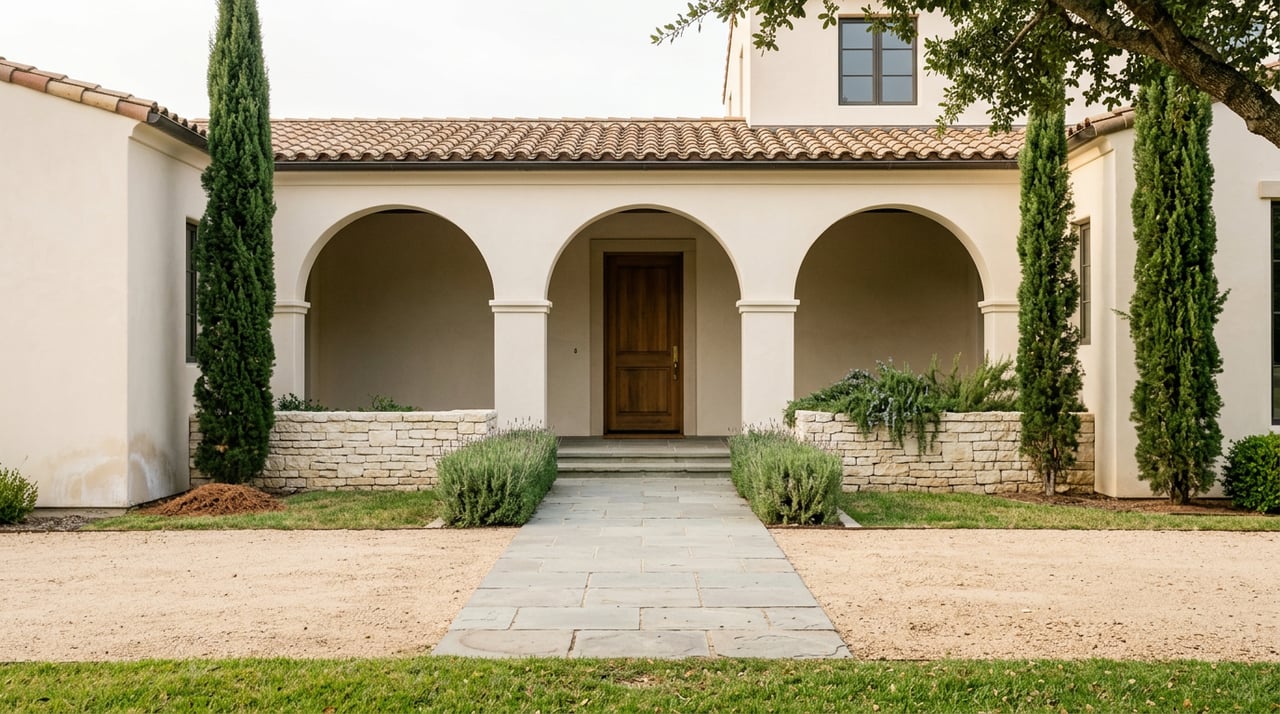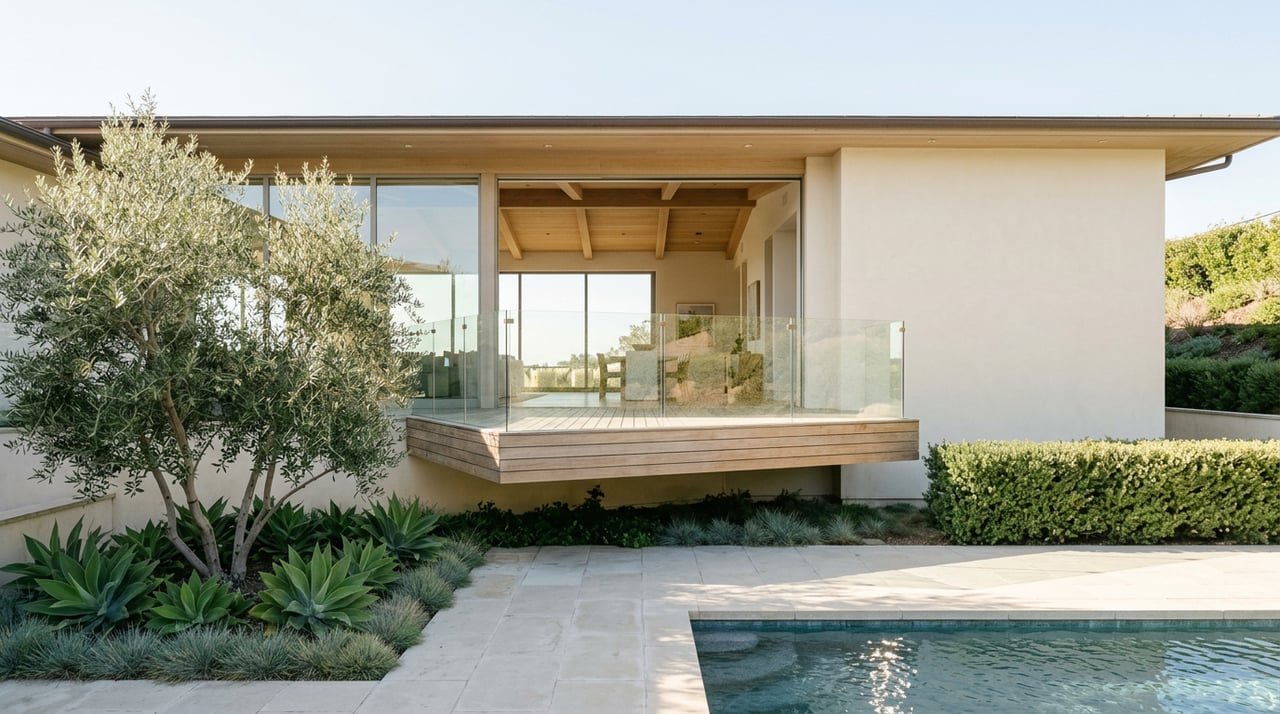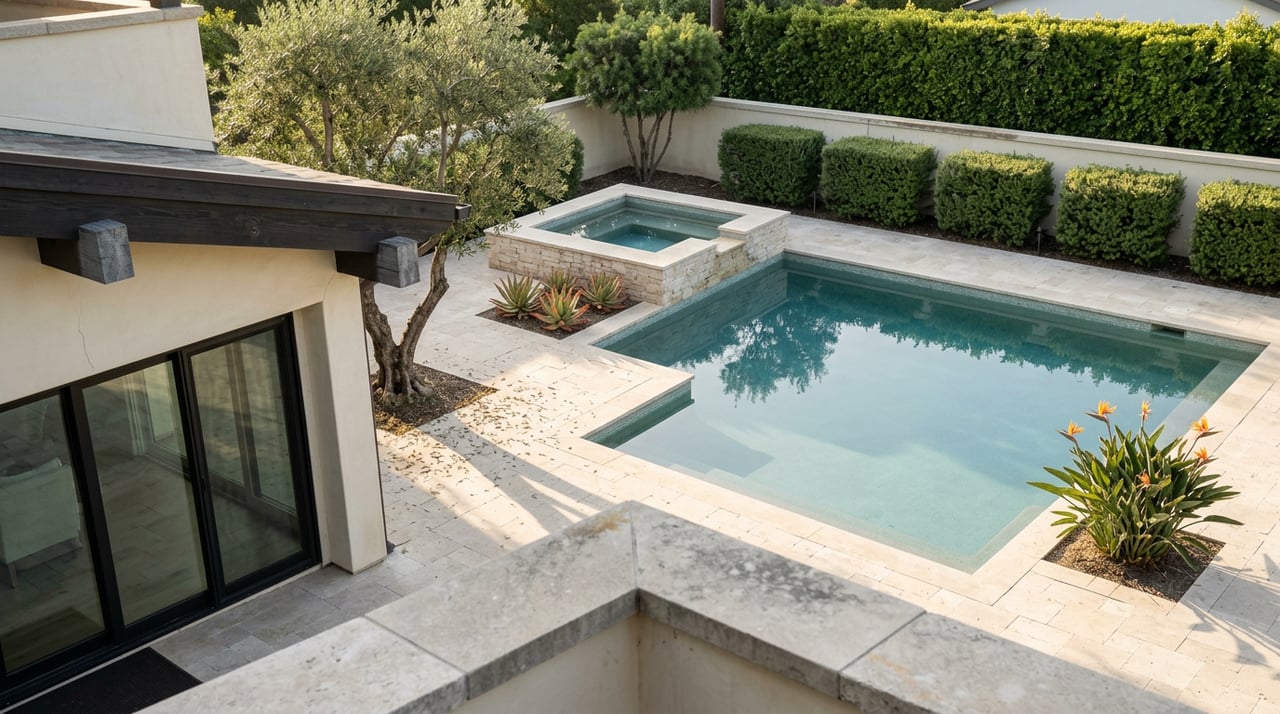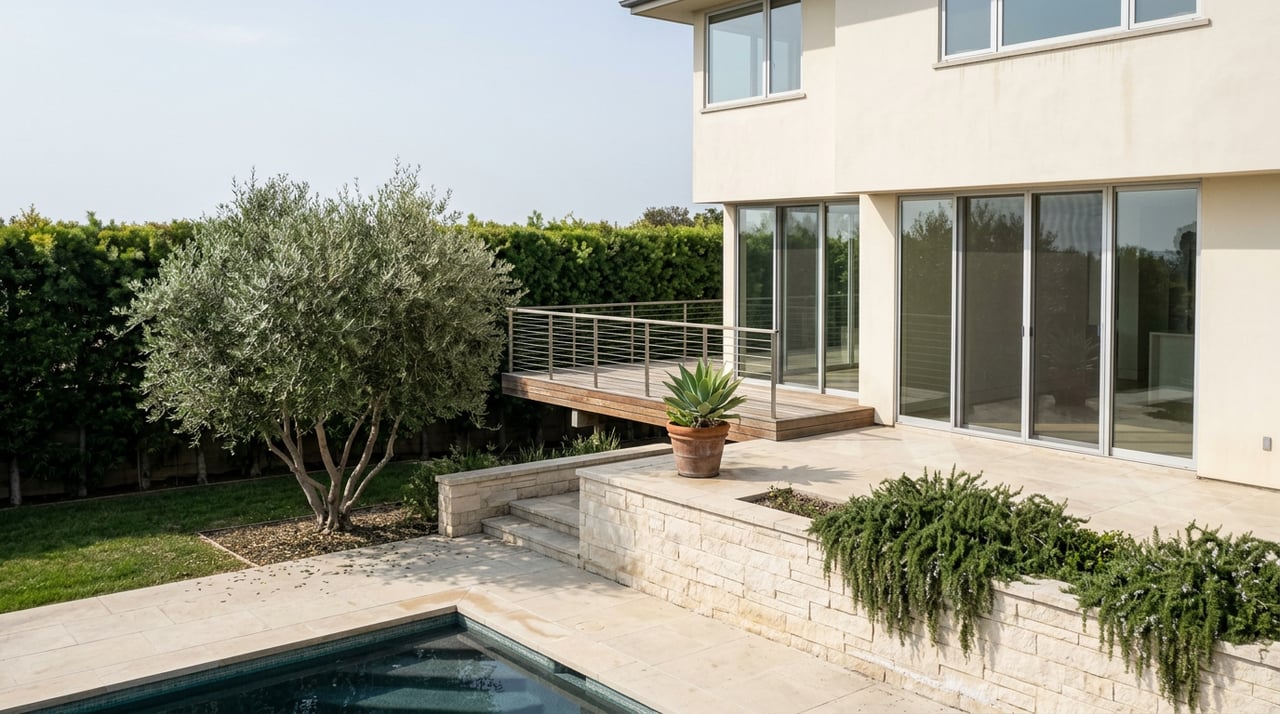
Two homes on Calumet Avenue in Bird Rock sit within a few lots of each other on the same eroding stretch of coastline. Both carry ocean views that put them well into seven figures. Only one of them has a clear legal path to a seawall if the ground underneath keeps giving way. The difference has nothing to do with the view, the price, or the size of the lot. It comes down to the year the house was built.
That distinction sat mostly theoretical until this year, when the bluff itself forced the question.
What's Actually Happening on Calumet Avenue
By April 2026, erosion along the Bird Rock bluff had moved from a slow-motion worry to a visible problem. Crews demolished part of a back patio at one Calumet Avenue home after the ground beneath it began to give way, CBS 8 reported at the time. Warning signs reading "Unstable Cliff, Stay Back" went up along the edge. A neighbor a few houses down, Greg Daunoras, told CBS 8 he expects he'll need to take his own protective steps soon.
"It's going to have to be considered in a year or two or three."
He wasn't describing a hypothetical. He was describing a street where the bluff has started failing house by house.
The Report Behind the Seawall
At 5360 Calumet Avenue, the geotechnical numbers finally caught up with what residents were already seeing. A 2023 report on the property found it susceptible to damage from ongoing bluff deformation, and by this year the site's bluff safety factor had dropped to 1.16, a figure close enough to failure that it moved the project through approval. On August 19, 2026, San Diego hearing officer Jeffrey Szymanski signed off on a 70-foot seawall for the property, according to La Jolla's local news coverage. The design calls for reinforced shotcrete carved to match the bluff's texture, anchored by 21 tiebacks drilled at variable depths into the rock.
The attorney representing the homeowner, Trettin, also represents owners at 5322 and 5316 Calumet, where the same erosion pattern is playing out. In her account of the mechanics, winter wave action on that stretch of beach picks up large cobbles and throws them directly into the bluff face, accelerating the wear.
The Year That Actually Decides Who Gets to Build One
Here's the part that matters for anyone buying or selling on that bluff, or any bluff in La Jolla. California's Coastal Act treats shoreline armoring differently depending on when the structure it's protecting was built. The law mandates protection for existing structures built before its 1977 enactment, and for public beaches. Everything built after that date falls into a different, more contested category. The Calumet Avenue home that just won seawall approval was built in 1985, which means its owner had to fight for a discretionary approval rather than claim a right the law already guarantees to older neighbors.
That case got approved because the bluff safety factor had fallen to 1.16, close enough to collapse that the city had strong grounds to act. A post-1977 home with a less dramatic erosion profile might not clear that bar as easily.
| Built before 1977 | Built after 1977 | |
|---|---|---|
| Legal standing for armoring | Protection is legally mandated under the Coastal Act | Approval is discretionary, case by case |
| What it takes to get approved | Existing legal entitlement | Geotechnical proof of imminent risk, often near-failure conditions |
| Precedent | Established, low dispute | Actively contested, evolving case by case (Calumet Ave, 2026) |
If you're evaluating a bluff-top listing, the year on the building permit is doing more work than the square footage on the flyer.
A State Supreme Court Ruling Changed the Process, Not the Bluff
On April 23, 2026, the California Supreme Court issued a unanimous ruling in Shear Development Co. v. California Coastal Commission that limits the Commission's ability to override a city-approved permit based on subjective hazard designations not backed by official maps. For La Jolla and Bird Rock bluff owners, that narrows one layer of uncertainty in the approval chain. It does not touch the underlying physics, the 1977 dividing line, or the geotechnical proof still required to get a seawall approved on a post-1977 structure. A cleaner appeals process is not the same thing as an easier path to armoring.
The Setback Number Also Moved
Separately from the armoring question, the baseline rules for how close you can build to a bluff edge changed this year too. San Diego's municipal code has long required new development to sit at least 40 feet back from a coastal bluff edge, but updated city guidance that took effect July 1, 2026 pushed total required setbacks, once geotechnical and safety-factor calculations are layered in, from roughly 53 to 55 feet up to 63 to 64 feet for most La Jolla and Bird Rock properties.
That change lands hardest on the older homes on the block. On April 15, 2026, La Jolla's Development Permit Review Committee reviewed a proposal to expand a 1,957-square-foot Bird Rock home to 4,388 square feet, and sent the applicant back for more detail on fence materials, floor area ratio math, and the bluff setback plan itself, according to local reporting on the hearing. During that discussion, a committee member noted that some of these homes were originally approved with a setback of just 15 feet from the bluff edge.
"That would never happen today."
Homes built decades ago under a 15-foot standard are now sitting well inside a line the city has more than quadrupled. That doesn't make them illegal. It makes any remodel, addition, or rebuild on those lots a much bigger conversation with the city than the listing photos suggest.
What This Actually Means at the Escrow Table
None of this shows up on the state's standard Natural Hazard Disclosure form. Coastal erosion is not among the hazards California requires sellers to disclose through the NHD process. That leaves a gap: a seller who knows about active bluff movement, prior patio damage, or an unpermitted repair still has to disclose it through the separate Transfer Disclosure Statement if it's a known material fact, but a buyer relying only on the standard hazard checklist will not see it flagged there.
For a bluff-top property in La Jolla or Bird Rock, that means the real due diligence work happens outside the standard form. Before writing or accepting an offer on a bluff-adjacent home, it's worth requesting:
- Full permit history from the city's Development Services Department, to confirm every exterior improvement, including patios, decks, and prior stabilization work, was properly permitted
- A recent geotechnical report addressing bluff retreat rate and current safety factor, not just a general soils report
- Any Coastal Development Permit history or open enforcement actions tied to the parcel
- Confirmation of the structure's original construction date, given how differently the Coastal Act treats pre- and post-1977 buildings
A coastal-specific geotechnical analysis for a bluff lot runs meaningfully more than a standard inland soils report, and a full due-diligence package covering the geotechnical report, permit history research, and a waterproofing assessment for ocean-facing glass can add up to several thousand dollars before you're even past inspection contingencies. It's not a cost most buyers plan for until they're already in escrow on a property they love. Building it into the budget from the first offer avoids a mid-escrow surprise.
Timelines matter here too. A clean Coastal Development Permit process, from initial geotechnical study through city processing, typically runs six to twelve months. Add a resubmission or an appeal and it stretches to twelve to eighteen months. That's not a reason to avoid the market. It's a reason to know exactly what you're buying into before you're locked into a contingency clock.
Frequently Asked Questions
Does the state's Natural Hazard Disclosure form cover bluff erosion in La Jolla? No. Coastal erosion and bluff retreat are not among the hazards California requires on the standard NHD. A seller's separate Transfer Disclosure Statement is where known erosion issues or prior repairs are supposed to surface, if the seller is aware of them.
If I buy a post-1977 bluff home, can I still eventually get a seawall approved? Yes, but it's a harder case to make than for an older structure. The Calumet Avenue approval in 2026 succeeded because the bluff's measured safety factor had dropped to 1.16, close to failure. A less severe erosion profile on a newer home may not clear the same bar as easily.
Does a seawall approval or CDP transfer to a new owner when the property sells? Recorded permits and approved plans stay with the property, but any unresolved conditions of approval, monitoring requirements, or open enforcement issues need to be reviewed as part of the sale. Pulling the full permit history before writing an offer is the only way to know what you're actually inheriting.
The bluff doesn't care what a listing says about the view. If you're buying or selling on La Jolla's coastline, especially in Bird Rock, the year stamped on the original building permit is one of the first things worth knowing, not one of the last. Karlee Van Dyke works these transactions across San Diego's coastal micro-markets and can help you pull the permit history, line up the right geotechnical review, and get a clear-eyed valuation on a bluff-top property before you're inside a contingency deadline. Get Your Free Home Valuation to start that conversation.